

-
ꄶ Fluid Power
-
ꄶ Test & Measurement
-
ꄶ Analytical Inst.
-
ꄶ Power Transmission
-
ꄶ Electrical
-
ꄶ Automation
-
ꁇ VFDs
-
ꁇ Modules
-
ꁇ Control Systems
-
ꁇ Sensors
-
Proximity Sensors
-
Temperature Sensors
-
Photoelectric Sensors
-
Pressure Sensors
-
Magnetostrictive Sensors
-
Ultrasonic Sensors
-
Load Cells
-
Linear Displacement Sensors
-
Torque Sensors
-
Displacement Sensors
-
Inductive Sensors
-
Vibration Sensors
-
Pulse Sensors
-
Other Sensors
-
Angle Sensors
-
Temperature Digital Indicators
-
Turbidity Sensors
-
Probes
-
-
ꁇ Industrial Computers
-
ꁇ Encoders
-
ꁇ Servo Systems
-
-
ꄶ Thermal

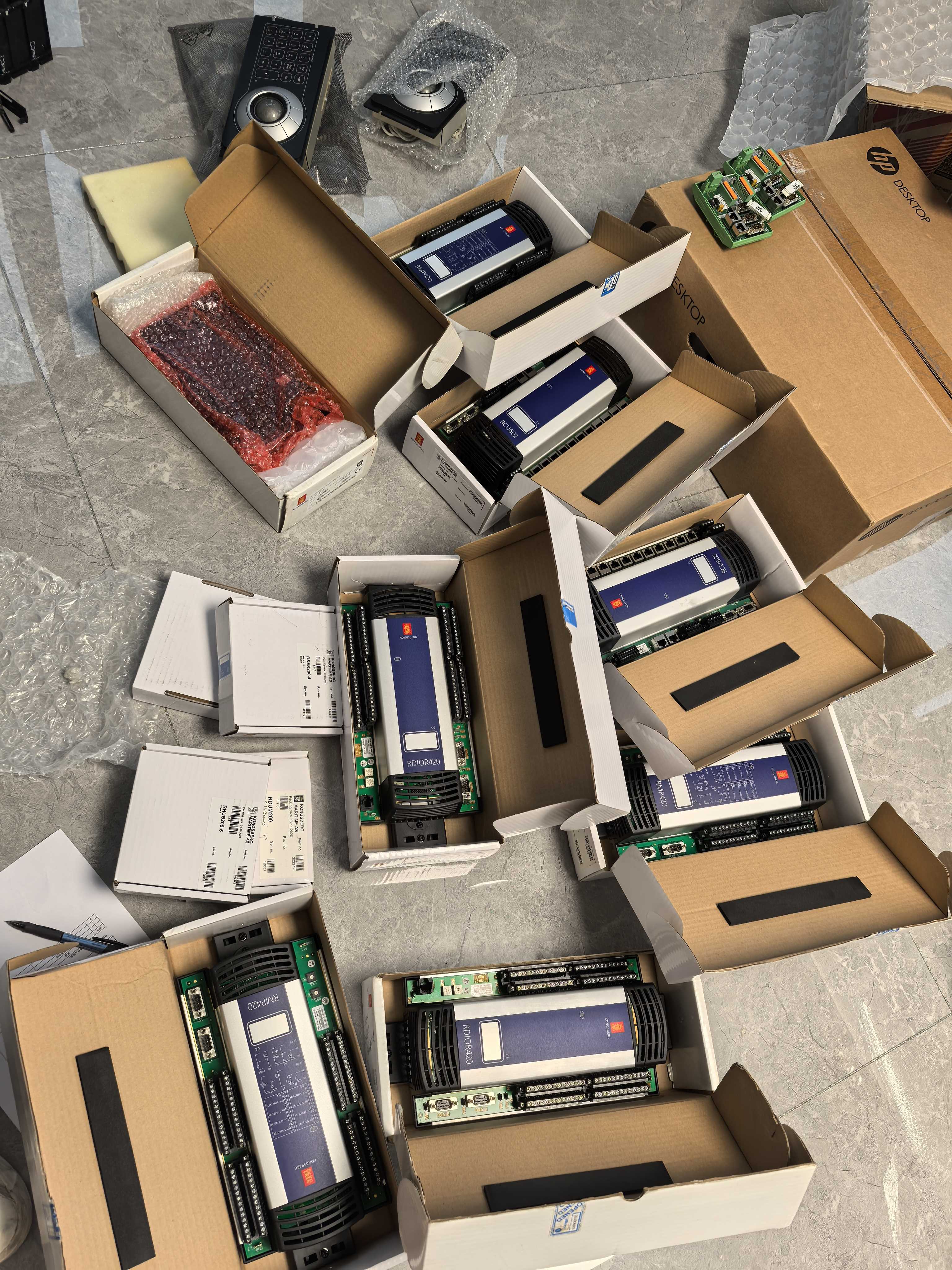

KONGSBERG RMP420 Remote Multipurpose I/O Module
1. Product Overview
The Kongsberg RMP420 (part no. 306712) is a Remote Multipurpose Input/Output Module manufactured by Kongsberg Maritime AS of Norway, and is a core distributed I/O unit in the K-Chief series marine alarm monitoring and integrated control systems. This module is designed for on-site signal acquisition and control output on ships, communicating with the RCU main controller via redundant I/O bus (RBUS), enabling acquisition of temperature, pressure, level, flow, status and other signals, and control output of pumps, valves, alarms and other equipment in various ship areas.
The RMP420 is equipped with 32 software-configurable multipurpose solid-state channels, each channel can be configured via software as analog input, analog output, digital input, digital output, or pulse/frequency interface, flexibly adapting to different field signal requirements without hardware replacement, greatly reducing spare part types and system configuration complexity. Analog input supports 0-10V voltage and 0-20mA (including 4-20mA) current signals, with measurement accuracy up to ±0.15% full scale; analog output supports 0-10V voltage and 0-20mA current signals, with accuracy ±0.35% full scale, can directly drive field devices such as control valves, indicators, etc.
In terms of communication, the RMP420 connects to the RCU main controller via redundant RBUS, using 2 9-pin male D-Sub connectors, RS485 electrical interface, with galvanic isolation. Dual bus redundancy design ensures high communication reliability. The module I/O circuit power output has short-circuit protection function, providing reliable power support for field sensors, avoiding module damage caused by field short circuits.
The RMP420 is powered by 24V DC, with operating voltage range 18-31.2V, typical power consumption 10W, adapting to ship power grid voltage fluctuations. Operating temperature range is -15°C to +70°C, can operate stably in high-temperature environments such as ship engine rooms. Protection rating is IP20 (module level), designed for installation in control cabinets, dimensions 355×158×87mm, weight 1.35kg, adopts 35mm DIN rail vertical mounting, easy installation and maintenance.
This module is approved for Ex Zone 2 (hazardous area Zone 2) applications, can be installed in areas with explosive gas risk (such as pump rooms, cargo hold perimeters, etc.), certified by major classification societies such as DNV-GL, ABS, LR, BV, etc., widely used in K-Chief automation systems on various commercial ships, offshore platforms, and special vessels. The product is genuine Kongsberg original, with a 12-month quality warranty.
2. Specifications
表格
| Parameter | Value |
|---|---|
| Brand | Kongsberg Maritime AS (Norway) |
| Model | RMP420 |
| Part No. | 306712 (reference, may vary by version) |
| Product Type | Remote Multipurpose Input/Output Module |
| Applicable System | K-Chief series marine alarm monitoring and integrated control systems |
| Total I/O Channels | 32 software-configurable multipurpose solid-state channels |
| Channel Configuration | Software configurable, no hardware replacement required |
| Analog Input (AI) | 0-10V DC voltage / 0-20mA DC current (including 4-20mA) |
| AI Measurement Accuracy | ±0.15% Full Scale (FS) |
| AI Max Wire Resistance | 25 Ω/wire |
| AI Response Time | 1000 ms |
| Analog Output (AO) | 0-10V DC voltage (internal resistance 1kΩ) / 0-20mA DC current |
| AO Accuracy | ±0.35% Full Scale (FS), voltage output ±0.5% |
| AO Min Load Resistance | 500 Ω (current output) |
| Digital Input (DI) | Supported (specific voltage range to be confirmed, reference 24V DC) |
| Digital Output (DO) | Supported (solid-state output, specific capacity to be confirmed) |
| Pulse/Frequency Interface | Supported (max frequency to be confirmed) |
| Communication Interface | Redundant RBUS, 2×9-pin male D-Sub connectors |
| Communication Type | RS485, Galvanic Isolation |
| Communication Redundancy | Dual bus redundancy |
| Supply Voltage | 24 V DC (nominal), operating range 18-31.2 V DC |
| Typical Power Consumption | 10 W |
| Max Power Consumption | To be confirmed (reference 15-20W) |
| I/O Power Output | With short-circuit protection, can power field sensors |
| Operating Temperature | -15°C ~ +70°C |
| Storage Temperature | -25°C ~ +70°C (reference, some sources -25°C ~ +85°C) |
| Humidity | Up to 98% RH (operating/storage) |
| Protection Degree | IP20 (IEC 60529, module level) |
| Explosion-proof Certification | Approved for Ex Zone 2 |
| Classification Society Certification | DNV-GL, ABS, LR, BV (complete list to be confirmed) |
| EMC Standard | To be confirmed (reference complies with marine EMC related standards) |
| Vibration | To be confirmed (reference 2g RMS, 5-350Hz) |
| Shock | To be confirmed (reference 15g, 20ms half-sine) |
| Dimensions (H×W×D) | 355 × 158 × 87 mm |
| Weight | 1.35 kg |
| Mounting Method | 35mm DIN rail vertical mounting (35 7.5/15) |
| Wiring Method | Screw terminals (specific specifications to be confirmed) |
| Configuration Tool | Kongsberg system configuration software |
| Life Prediction | GB 25°C (60% confidence): 38.5 years; NS 35°C (environmental derating): to be confirmed |
| MTBF | To be confirmed (high reliability, reference > 100,000 hours) |
| Country of Origin | Norway (Kongsberg Maritime factory) |
| HS Code | To be confirmed (reference 85371090 or 85437090) |
| Stock Status | Order available |
| Warranty Period | 12 months |
3. Key Features
- 32-Channel Software-Configurable Multipurpose I/O — Equipped with 32 software-configurable multipurpose solid-state channels, each channel can be flexibly configured via software as analog input, analog output, digital input, digital output, or pulse/frequency interface, adapting to different field signal requirements without hardware replacement, greatly reducing spare part types and lowering system configuration and maintenance complexity.
- High-Precision Analog Acquisition and Output — Analog input supports 0-10V voltage and 0-20mA (including 4-20mA) current signals, measurement accuracy up to ±0.15% full scale, ensuring accurate acquisition of process signals such as temperature, pressure, level, flow; analog output supports 0-10V voltage and 0-20mA current, accuracy ±0.35% full scale, can directly drive field devices such as control valves, indicators, meeting precise control requirements.
- Redundant RBUS Communication — Communicates with RCU main controller via redundant RBUS, using 2 9-pin male D-Sub connectors, RS485 electrical interface, with galvanic isolation. Dual bus redundancy design ensures that when one bus fails, the other automatically takes over, communication is not interrupted, meeting high reliability requirements of critical ship monitoring and control systems.
- Ex Zone 2 Explosion-proof Certification — Approved for Ex Zone 2 applications, can be installed in areas with explosive gas risk (such as pump rooms, cargo hold perimeters, oil tank perimeters, etc.), expanding module application range, meeting signal acquisition and control requirements in ship hazardous areas without additional explosion-proof isolation measures.
- 24VDC Wide Voltage Power Supply and Short-Circuit Protection — 24V DC power supply, operating voltage range 18-31.2V, adapting to ship power grid voltage fluctuations and drops. I/O circuit power output has short-circuit protection function, can provide reliable power for field sensors, avoiding module damage caused by field wiring short circuits, improving system robustness.
- Marine-Grade Wide Temperature Range and Environmental Adaptability — Operating temperature range -15°C to +70°C, humidity up to 98% RH, can operate stably in high-temperature and high-humidity environments such as ship engine rooms and pump rooms. IP20 protection rating designed for control cabinet installation, with suitable control cabinet can meet protection requirements of various ship areas. Vibration and shock performance meet marine environment requirements.
- Standard DIN Rail Mounting, Easy Maintenance — Dimensions 355×158×87mm, weight 1.35kg, adopts 35mm standard DIN rail vertical mounting, simple and quick installation and removal, convenient for field maintenance and replacement. Modular design supports hot-swap (need to confirm system configuration), reducing maintenance downtime.
- Multiple Classification Society Certifications, Globally Applicable — Passed type approval from major international classification societies such as DNV-GL, ABS (American Bureau of Shipping), LR (Lloyd's Register), BV (Bureau Veritas), etc. Products meet regulatory requirements of global classification societies, can be applied to ships and offshore platforms flying any flag, no additional certification required.
- Kongsberg K-Chief System Original Factory Adaptation — Specifically designed for K-Chief series marine alarm monitoring and integrated control systems, perfectly compatible with RCU main controllers, operator workstations, database servers, etc., plug-and-play, no additional development and integration required, ensuring complete compatibility and optimal communication performance with K-Chief systems.
- High Reliability and Long Life Design — Adopts industrial-grade components and solid-state channel design, no mechanical contact wear, long life. Life prediction: 38.5 years at 25°C environment (60% confidence), high MTBF, ensuring reliable operation throughout ship life cycle, reducing maintenance replacement frequency and life-cycle cost.
4. Typical Applications
- Ship Engine Room Monitoring and Alarm System (MAS): Distributed signal acquisition unit in engine room area of K-Chief system, acquiring temperature, pressure, level, flow, speed, status and other signals of main engine, auxiliary engines, boilers, pumps, valves, heat exchangers and other equipment, 实现 monitoring, alarm and interlock protection
- Ship Process Control System: Signal acquisition and control output for ship process systems such as cargo oil loading/unloading, ballast water, fuel oil transfer, cooling water, fire water, bilge water, etc., 实现 remote start/stop of pumps and valves, level control, flow regulation, process interlock, etc.
- Ship Hazardous Area (Ex Zone 2) Signal Acquisition: Signal acquisition and control in Ex Zone 2 areas with explosive gas risk such as pump rooms, cargo hold perimeters, oil tank perimeters, fuel stations, etc., no additional explosion-proof isolation measures required
- Offshore Platform Automation System: Remote I/O unit for K-Chief automation system on offshore drilling platforms, production platforms, FPSO, FSRU and other offshore facilities, monitoring and controlling platform production equipment, utility systems, safety systems, etc.
- Ship Integrated Automation System (IAS): Integrated automation signal acquisition and control for whole ship areas including engine room, deck, cargo hold, accommodation, etc., 实现 centralized monitoring and control of whole ship equipment
- Ship Dynamic Positioning System (DP): Signal acquisition and control interface unit for thrusters, steering gears, sensors and other equipment in dynamic positioning system, 实现 on-site signal processing for position keeping, heading control and other functions
- Special Ship Automation: Remote I/O unit for automation systems on special ships such as research vessels, icebreakers, engineering vessels, naval auxiliary vessels, LNG carriers, chemical carriers, meeting monitoring and control requirements and hazardous area requirements of special ships
- Ship Cargo Hold Monitoring: Temperature, humidity, level, pressure, gas concentration and other signal monitoring in cargo hold areas of bulk carriers, container ships, tankers, chemical carriers, etc., 实现 cargo hold environmental monitoring and alarm
- Ship Deck Machinery Control: Control and status monitoring interface unit for deck machinery such as windlasses, winches, cranes, gangways, capstans, etc.
- Ship Power Station Automation: Signal acquisition and control interface for generators, switchboards, loads and other equipment in ship power station system, 实现 power station automation management and load scheduling
- Ship HVAC System: Temperature, humidity, air pressure, fan status, damper position and other signal monitoring and control for ship air conditioning and ventilation systems
- Ship Safety System: Signal acquisition and alarm interface unit for safety systems such as fire alarm, combustible gas detection, flooding monitoring, smoke detection, etc. (need to confirm whether integrated with safety system)
- New Shipbuilding Automation System Integration: Supporting remote I/O module for K-Chief automation system on newly built ships
- Ship Automation System Upgrade and Retrofit: Remote I/O module replacement and expansion when upgrading old ship automation systems to K-Chief system
5. Model Explanation
Product Model: RMP420
Part No.: 306712 (reference, may vary by version/batch)
Product Description: Remote Multipurpose Input/Output Module, for K-Chief Alarm Monitoring and Integrated Control Systems
Model code breakdown:
- RMP: Remote Multipurpose series code
- 420: Model code (400 series, 32-channel configuration)
Official Documentation:
- RMP420-Remote Multipurpose Input/Output (Kongsberg official datasheet)
- Manufacturer: Kongsberg Maritime AS, P.O. Box 483, NO-3001 Kongsberg, Norway
Key Parameters Summary:
表格
| Parameter | Value |
|---|---|
| Channels | 32 software-configurable multipurpose channels |
| AI Range | 0-10V / 0-20mA |
| AI Accuracy | ±0.15% FS |
| AO Range | 0-10V / 0-20mA |
| AO Accuracy | ±0.35% FS |
| Communication | Redundant RBUS (RS485, galvanic isolation) |
| Power Supply | 24VDC (18-31.2V) |
| Dimensions | 355×158×87mm |
| Weight | 1.35kg |
| Operating Temperature | -15°C ~ +70°C |
| Explosion-proof | Ex Zone 2 |
Related Models in Same Series (reference):
表格
| Model | Description |
|---|---|
| RMP420 | Remote Multipurpose I/O Module (this product, 32 channels) |
| RMP422 (S) | Remote Multipurpose I/O Module (other version/configuration) |
| RCU502i | Remote Control Unit (main controller) |
| RCU602 | Remote Control Unit (higher configuration) |
| RDIO401S | Remote Digital I/O Module |
| RDIO420S | Remote Digital I/O Module |
| RDIOR420 | Remote Digital I/O Relay Output Module |
| RTB420 | Remote Terminal Module |
| RHUB200-5 | Remote Hub Module |
| RSER200- | Remote Serial Interface Module |
Brand: Kongsberg Maritime AS, global leading marine automation and ocean technology company, headquartered in Kongsberg, Norway
6. Installation & Usage Instructions
Pre-Installation Preparation:
- Confirm RMP420 model and part number match system requirements
- Confirm required channel configuration (AI/AO/DI/DO/pulse) and field signal types
- Prepare 24V DC power supply, RBUS bus cables, terminal blocks, signal cables, etc.
- Prepare configuration tool (Kongsberg system configuration software and computer)
- Read Kongsberg RMP420 installation manual and K-Chief system documentation
Installation Notes:
- Installation and wiring must be performed in de-energized state, ensure safety
- Wear anti-static wrist strap to avoid electrostatic damage to module circuit
- RMP420 has IP20 protection rating, must be installed inside control cabinet, avoid direct exposure to humid, dusty, corrosive gas environments
- If installed in Ex Zone 2 area, must use control cabinet and wiring method meeting explosion-proof requirements, follow explosion-proof installation specifications
- Control cabinet should have appropriate protection rating and ventilation and heat dissipation conditions
- Module adopts 35mm standard DIN rail vertical mounting, ensure clips are secure and module has good contact with rail
- Leave appropriate heat dissipation space between modules (reference at least 10-20mm spacing)
- Avoid installing module directly above heating elements (such as transformers, braking resistors)
- Keep away from strong interference sources (such as frequency converters, transformers, contactors), or take shielding measures
Wiring Instructions:
- Power Wiring: 24V DC power supply connected to power terminals, pay attention to positive and negative polarity, operating voltage range 18-31.2V
- RBUS Bus Wiring: 2 9-pin male D-Sub connectors respectively connect to A line and B line of redundant RBUS, pay attention to RS485 A/B polarity, use shielded twisted pair, shield grounded at one end
- Bus Termination Resistor: RBUS must have termination resistors at both ends (usually 120Ω), intermediate nodes do not connect
- I/O Channel Wiring: According to channel configuration (AI/AO/DI/DO), correctly connect field sensors and actuators per module wiring diagram
- Analog input (4-20mA): use shielded twisted pair, shield grounded at one end, pay attention to current loop polarity
- Analog input (0-10V): use shielded cable, avoid parallel routing with power cables
- Analog output (0-20mA): pay attention to load resistance not less than 500Ω, avoid short circuit
- Analog output (0-10V): pay attention to output internal resistance 1kΩ, load impedance should be large enough
- Digital input: pay attention to input voltage range, passive contact or active signal wiring methods differ
- Digital output: solid-state output pay attention to load capacity, inductive loads need surge suppressors
- Field Sensor Power Supply: If using module I/O power output to power sensors, pay attention to total current not exceeding module output capacity, and with short-circuit protection
- All wiring terminals should be tight and reliable, avoid virtual connections
- After wiring completion, check all wiring, confirm correct before power-on
Configuration & Commissioning:
- Confirm all wiring is correct and module is installed in place
- Turn on 24V DC power, observe module power indicator and status indicator
- Connect to RMP420 via Kongsberg system configuration software (via RCU or dedicated configuration interface)
- Configure module address, RBUS bus parameters, communication rate, etc.
- Configure type (AI/AO/DI/DO/pulse), signal range, span, unit, alarm threshold, filtering parameters for each of 32 channels
- For analog input channels, configure signal type (0-10V/0-20mA/4-20mA), engineering range, alarm upper/lower limits
- For analog output channels, configure output type (0-10V/0-20mA), output range, initial value
- Download configuration to RMP420
- Test communication: confirm RMP420 communicates normally with RCU main controller, both redundant buses work normally
- Test I/O channels: test analog input (inject standard signal to verify reading and accuracy), digital input (short contact to verify status), output channels (force output to verify action and accuracy) one by one
- Test alarm and interlock functions: simulate alarm conditions, verify alarm reporting and interlock actions are correct
- Test redundancy function: disconnect one RBUS, verify communication is not interrupted; after recovery verify automatic switch back
- Save configuration file, make configuration backup
- Record RMP420 installation location, address, channel configuration, I/O list and other information in system documentation
Maintenance Recommendations:
- Regularly (recommended every 6-12 months) check RMP420 module operating status, indicator status
- Regularly check wiring terminals for looseness, especially in areas with large vibration and Ex areas
- Regularly check RBUS bus connectors and termination resistors are normal
- Regularly backup system configuration files, avoid configuration loss
- Recommended to stock 1-2 RMP420 modules as ship spare parts for quick replacement in case of failure
- When module fails, can quickly recover by replacing spare part, faulty module returned to Kongsberg or authorized service provider for repair
- Keep control cabinet clean, dry, well-ventilated, regularly clean dust
- Avoid plugging/unplugging module while energized (unless hot-swap supported)
- When upgrading K-Chief system software, confirm RMP420 firmware compatibility, upgrade module firmware if necessary
- For modules installed in Ex Zone 2 areas, regularly check explosion-proof sealing and control cabinet integrity, ensure explosion-proof performance
Safety Notes:
- Module operates at 24V DC safety voltage, but connected field equipment may be in high-voltage state (such as equipment controlled by relay output), pay attention to high-voltage hazard of related equipment during maintenance
- Maintenance of modules installed in Ex Zone 2 areas must follow explosion-proof area safety operation regulations, necessary to apply for work permit
- Maintenance of RMP420 involved in ship safety systems (such as fire alarm, flooding monitoring) must follow ship safety management regulations, notify captain and duty personnel if necessary
- Wait for module to fully discharge after power-off before plugging/unplugging
- Discarded electronic modules should be disposed of per ship garbage management regulations and e-waste regulations
7. Why Choose Us
- Factory Order, Quality Guaranteed — All products sourced directly from Kongsberg Maritime factory or authorized channels, ensuring genuine originals with factory packaging, certificates, and quality documents, provides 12-month original factory warranty. Standard lead time 4-8 weeks, rush orders can be coordinated for expedited delivery.
- Worldwide Delivery — Supports DHL, FedEx, UPS and other international couriers. Can also ship via your designated freight forwarder to 200+ countries, can arrange ship port delivery.
- Professional Technical Support — Provides selection consultation (confirming K-Chief system compatibility, channel configuration requirements, part number confirmation, Ex area applicability), wiring guidance, configuration commissioning support, firmware upgrade recommendations, and fault diagnosis services, helping you correctly install and maintain marine automation systems.
- Flexible Procurement — Supports single module procurement and bulk project orders, tiered pricing discounts with quantity. Can provide new shipbuilding project-specific quotations, ship spare part packages (RMP420 + related I/O modules + accessories combination), and annual spare part framework agreements.
- Pre-shipment Inspection — Appearance check, packaging verification, model confirmation, and power-on test performed before shipment, ensuring delivered products are intact, model-accurate, and functional.
8. Frequently Asked Questions (FAQ)
Q1: Which marine automation systems is this RMP420 compatible with? Can my ship use it?
A: The RMP420 is mainly compatible with Kongsberg K-Chief series marine alarm monitoring and integrated control systems (such as K-Chief 500, K-Chief 600, K-Chief 700, etc.), serving as a remote multipurpose I/O module. Whether your ship can use it requires confirmation:
- Whether the ship automation system is Kongsberg K-Chief series (or compatible K-Chief system)
- Model of existing remote I/O modules in the system (whether RMP420/RMP422/RDIO series, etc.)
- Whether the system software version supports RMP420
- Type and quantity of I/O signals required (AI/AO/DI/DO/pulse)
- Whether installation area is Ex Zone 2 (hazardous area)
- Ship classification society requirements (product needs to pass corresponding classification society certification) It is recommended that you provide the ship automation system model, software version, existing I/O module model and part number, and we can assist in confirming compatibility. If your system is not K-Chief series, we can also recommend the corresponding system's remote I/O module model.
Q2: How many channels does RMP420 have? Can each channel be arbitrarily configured?
A: The RMP420 is equipped with 32 software-configurable multipurpose solid-state channels.
Regarding channel configuration:
- Each channel can be configured via software as one of the following types:
- Analog Input (AI): 0-10V voltage or 0-20mA/4-20mA current
- Analog Output (AO): 0-10V voltage or 0-20mA current
- Digital Input (DI): switch/contact status
- Digital Output (DO): solid-state output
- Pulse/Frequency Interface: pulse counting or frequency measurement
- Configuration is completed through Kongsberg system configuration software, no hardware replacement or jumper required
- Channel configuration is flexible, can be arbitrarily combined according to field signal requirements, for example: 16 AI + 8 DI + 8 DO, or other combinations
Notes:
- Specific configurable channel type combinations may be limited by module hardware (e.g., some channels may only be configurable as input or output), it is recommended to consult Kongsberg official datasheet for confirmation
- Number of analog output channels may be limited (not all 32 channels can be configured as AO simultaneously)
- It is recommended to provide a detailed I/O signal list before procurement, we can assist in confirming whether RMP420 meets requirements and how to reasonably configure channels
Q3: What is the analog accuracy of RMP420? Can it be used for custody transfer metering?
A: The analog accuracy of RMP420 is as follows:
- Analog Input (AI): ±0.15% Full Scale (FS)
- Analog Output (AO): ±0.35% Full Scale (FS), voltage output ±0.5%
Regarding custody transfer metering:
- ±0.15% analog input accuracy is relatively high in industrial process monitoring and control, can meet most ship process monitoring (temperature, pressure, level, flow, etc.) and control requirements
- But for custody transfer metering, such as cargo oil loading/unloading metering, fuel bunkering metering, LNG trade metering, etc., usually requires higher accuracy (such as ±0.1% or higher) and specialized metering certification (such as OIML, API, MPDS, etc.)
- The RMP420 is a general-purpose I/O module, not certified for custody transfer metering, not recommended for direct use in custody transfer metering
- For custody transfer metering applications, it is recommended to use specially certified flow meters and metering systems (such as Kongsberg cargo oil metering system, fuel metering system, etc.), RMP420 can be used for monitoring and display, but not as legal metering basis for custody transfer
- If your application is conventional process monitoring and control (non-custody transfer), RMP420 accuracy fully meets requirements
Q4: Can RMP420 be used in Ex Zone 2 hazardous areas? What to note?
A: Yes, the RMP420 is approved for Ex Zone 2 applications.
Ex Zone 2 definition:
- Zone 2 refers to areas where explosive gas atmospherers occasionally occur and exist for short periods (unlikely to occur in normal operation, even if occurs only for short duration)
- Typical Zone 2 areas on ships include: pump rooms, cargo hold perimeters, oil tank perimeters, fuel stations, battery rooms (part), paint rooms (part), etc.
Installation and usage notes:
- Control cabinet requirements: RMP420 itself is IP20 module-level protection, when installed in Ex Zone 2, must use control cabinet meeting explosion-proof requirements (such as Ex e increased safety or Ex d flameproof control cabinet), ensure control cabinet explosion-proof rating and protection rating meet Zone 2 requirements
- Wiring requirements: All wiring entering/exiting hazardous area must use explosion-proof cable glands, cables must meet explosion-proof requirements, wiring must follow explosion-proof installation specifications
- Sealing requirements: All openings and wiring ports of control cabinet must be sealed, ensure explosion-proof performance
- Maintenance requirements: When performing maintenance operations in Ex Zone 2 areas, must follow explosion-proof area safety operation regulations:
- Apply for work permit
- Perform combustible gas detection (Gas Test), confirm environment safe
- Take isolation, ventilation and other safety measures if necessary
- Use explosion-proof tools
- No live opening: Strictly prohibit opening explosion-proof control cabinet while energized, must power off and confirm safety before opening
- Regular inspection: Regularly inspect explosion-proof control cabinet sealing, cable glands, grounding, etc., ensure explosion-proof performance intact
- Documentation: Equipment installation, inspection, maintenance in Ex areas must be recorded, for classification society and Port State Control (PSC) inspection
Note: RMP420 is only approved for Zone 2, must not be used in Zone 0 or Zone 1 (areas where explosive gas atmospherers persist or frequently occur). If your application area is Zone 0 or Zone 1, need to use equipment with higher explosion-proof rating or take other explosion-proof measures (such as intrinsically safe isolation).
Q5: Is this product in stock? What is the lead time? What is the price?
A: This model is currently in order available status, standard lead time 4-8 weeks (ordered from Kongsberg Maritime factory or allocated from global inventory). The RMP420 is a dedicated marine automation spare part, with limited stock inventory, usually requiring production to order or allocation from global inventory.
- Price: Specific price subject to our formal quotation, bulk procurement can enjoy tiered discounts. This product is a Kongsberg marine automation dedicated multipurpose I/O module, price is higher than ordinary industrial I/O modules.
- Expedited service: If you have urgent needs (such as ship failure in port, tight shipping schedule, PSC inspection deficiency rectification), we can try to coordinate global stock inventory or expedited ordering, specific please contact our sales team.
- Used/refurbished: Some suppliers may provide used or refurbished RMP420, lower price but no quality and warranty guarantee, and may affect classification society certification. We recommend prioritizing Kongsberg original new products to ensure ship safety and system stability, especially for equipment used in Ex Zone 2 areas.
- Please indicate required quantity, ship model, installation area (whether Ex area), desired delivery time, and destination port when inquiring, we will do our best to coordinate the fastest delivery solution and optimal price.
Q6: What is the difference between RMP420, RCU502I, and RCU602? How do they work together?
A: RMP420, RCU502I, RCU602 are all components of Kongsberg K-Chief marine automation system, but differ in function and positioning:
表格
| Comparison Item | RMP420 | RCU502I | RCU602 |
|---|---|---|---|
| Type | Remote Multipurpose I/O Module | Remote Control Unit | Remote Control Unit |
| Main Function | Field signal acquisition and control output | Control processing, I/O expansion, communication | High-performance control processing, I/O expansion, communication |
| Channels | 32 configurable multipurpose channels | Up to 32 channels via expansion modules | More I/O expansion capability |
| Processing Capability | Signal processing, no complex control logic | Embedded processor, can execute control logic | Higher performance processor, stronger control capability |
| Communication | Redundant RBUS (slave) | Dual redundant CAN bus (master) + RBUS | Dual redundant CAN bus + more interfaces |
| Explosion-proof | Ex Zone 2 | To be confirmed | To be confirmed |
| Positioning | Distributed field I/O node | Area controller/small control station | Main controller/large control station |
How they work together:
- RCU (Main Controller): Serves as area control unit, responsible for control logic execution, data processing, communication with operator stations, connects to system central equipment via CAN bus
- RMP420 (Remote I/O): Serves as distributed field I/O node, installed near field equipment, connects to RCU via redundant RBUS, responsible for field signal acquisition and control output
- Typical architecture: Operator Workstation ↔ Central Server ↔ CAN Bus ↔ RCU502I/RCU602 ↔ RBUS ↔ RMP420 ↔ Field Sensors/Actuators
- Advantages: Distributed I/O architecture reduces field wiring quantity, improves system reliability, facilitates expansion and maintenance
How to choose:
- If only need field signal acquisition and control output, and already have RCU main controller → choose RMP420
- If need a small area controller with 少量 I/O → choose RCU502I
- If need high-performance main controller with 大量 I/O and complex control logic → choose RCU602
- Large systems are usually a combination of RCU + multiple RMP420
Q7: How to judge and replace a faulty RMP420? Does it need reconfiguration?
A: Fault judgment methods:
- Indicator Status: Observe power indicator, running indicator, communication indicator, fault indicator on the RMP420 module. Under normal status, power light is on, running light normal, communication light flashes; if power light is off may be power failure, if fault light is on may be hardware failure
- System Alarm: K-Chief operator workstation will display RMP module communication fault, I/O channel fault, hardware fault and other alarm information, can locate to specific module and channel
- I/O Data Abnormality: All I/O channel data under a certain RMP420 simultaneously abnormal or lost, may be module fault or communication fault; single channel abnormality may be field sensor/actuator fault or channel configuration problem
- Redundancy Switching: When one bus in redundant RBUS fails, system will alarm, but communication is not interrupted; if both buses fail, all signals under this RMP are lost
- Multimeter Measurement: Measure whether 24V power input is normal, whether RBUS signal is normal, determine whether it is power problem, bus problem, or module itself fault
Replacement steps:
- Notify duty personnel and captain (if 涉及 safety system), explain that module replacement will be performed
- If this RMP controls critical equipment, first switch related equipment to local control or manual control
- Disconnect RMP420 24V power supply
- Wait for module to fully discharge
- Mark all wiring positions (or take photos for record)
- Pull out faulty module (press DIN rail clip to remove)
- Insert new module, ensure clip is secure
- Restore wiring (per marks or photos)
- Restore 24V power supply
- Observe module indicators, confirm normal startup
Regarding reconfiguration:
- If replacing with the same model (RMP420), and system configuration is stored in RCU main controller: Usually no reconfiguration required, new module will automatically download configuration from RCU after power-on, plug-and-play
- If module firmware version is incompatible with system: May need to upgrade or downgrade module firmware
- If replacing with different model or channel configuration changes: Need to reconfigure channel parameters in system configuration software and download
- Recommendation: After replacement, test all I/O channels and communication functions, confirm normal before restoring system operation
- Regularly backup system configuration files, ensure configuration can be quickly restored after module replacement
